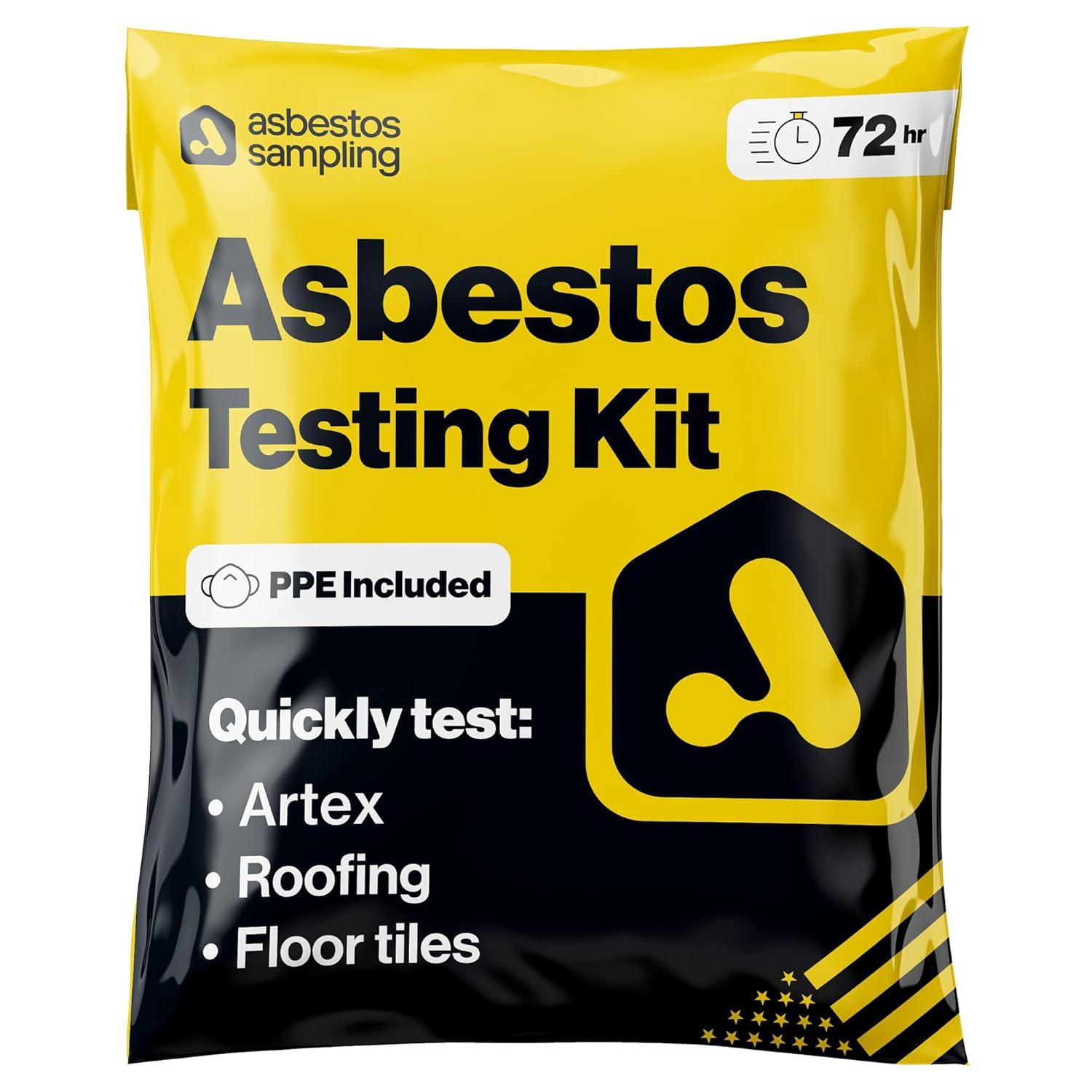
Asbestos Test Kit (Quality PPE Included) - 72hr (3 Business Day) NVLAP lab Result with lab Testing fee Included (3 Samples)
-
Detail
Our kit comes with a set of instructions guiding you through the whole process - Step by step.
What is Asbestos?
Asbestos is a mineral which was used extensively in construction throughout the 1900s. It was added to all kinds of construction materials to give them fireproofing and various other benefits. It was only in 1990 that scientists discovered that asbestos is actually a cancer causing carcinogen responsible for a range of potentially fatal respiratory diseases.
If asbestos containing materials are in good condition and undisturbed then they pose little to no risk to health. It is only when the product is disturbed that fibres are released into the air - This is when asbestos becomes harmful.
Do I have asbestos in my home?
Asbestos was widely used in home construction from 1930 to around 2000, particularly from 1960 onwards. Houses/flats built around this time may contain asbestos materials. Properties built since the mid 80’s are unlikely to have asbestos in the fabric of the building and from 1990 extremely unlikely. Asbestos was outlawed in the Europe in 1999.
Where is asbestos found in the home?
Asbestos was commonly used in many ways inside and outside of buildings:
- STEAM PIPES, BOILERS, and FURNACE DUCTS insulated with an asbestos blanket or asbestos paper tape. These materials may release asbestos fibers if damaged, repaired, or removed improperly.
- RESILIENT FLOOR TILES (vinyl asbestos, asphalt, and rubber), the backing on VINYL SHEET FLOORING, and ADHESIVES used for installing floor tile. Sanding tiles can release fibers. So may scraping or sanding the backing of sheet flooring during removal.
- CEMENT SHEET, MILLBOARD, and PAPER used as insulation around furnaces and woodburning stoves. Repairing or removing appliances may release asbestos fibers. So may cutting, tearing, sanding, drilling, or sawing insulation.
- DOOR GASKETS in furnaces, wood stoves, and coal stoves. Worn seals can release asbestos fibers during use.
- SOUNDPROOFING OR DECORATIVE MATERIAL sprayed on walls and ceilings. Loose, crumbly, or water-damaged material may release fibers. So will sanding, drilling, or scraping the material.
- PATCHING AND JOINT COMPOUNDS for walls and ceilings, and TEXTURED PAINTS. Sanding, scraping, or drilling these surfaces may release asbestos.
- ASBESTOS CEMENT ROOFING, SHINGLES, and SIDING. These products are not likely to release asbestos fibers unless sawed, dilled, or cut.
- ARTIFICIAL ASHES AND EMBERS sold for use in gas-fired fireplaces. Also, other older household products such as FIREPROOF GLOVES, STOVE-TOP PADS, IRONING BOARD COVERS, and certain HAIRDRYERS.
- AUTOMOBILE BRAKE PADS AND LININGS, CLUTCH FACINGS, and GASKETS.
Some other areas include:
- Some roofing and siding shingles are made of asbestos cement.
- Houses built between 1930 and 1950 may have asbestos as insulation.
- Asbestos may be present in textured paint and in patching compounds used on wall and ceiling joints. Their use was banned in 1977.
- Artificial ashes and embers sold for use in gas-fired fireplaces may contain asbestos.
- Older products such as stove-top pads may have some asbestos compounds.
- Walls and floors around woodburning stoves may be protected with asbestos paper, millboard, or cement sheets.
- Asbestos is found in some vinyl floor tiles and the backing on vinyl sheet flooring and adhesives.
- Hot water and steam pipes in older houses may be coated with an asbestos material or covered with an asbestos blanket or tape.
- Oil and coal furnaces and door gaskets may have asbestos insulation.
Simple Step By Step Instructions
-
Customer ReviewsNo comments